

In November of 1193, despite Rome’s objections. the emperor appointed a Spanish caballero, Pero de Alava, to be the judicature of affairs in and around the Italian fortress guarding and taxing the bridge over the Volturno River in Capua. It was Pero’s first imperial commission. The Spaniard didn’t know it then, but he was a pawn being strategically interjected into the heart of an evolving battlefield, a volatile arena of bloodshed waiting to burst.
On September 28, 1198, the heart exploded and blood flowed. Emperor Henry VI died. Civil War erupted. Pawns beware.
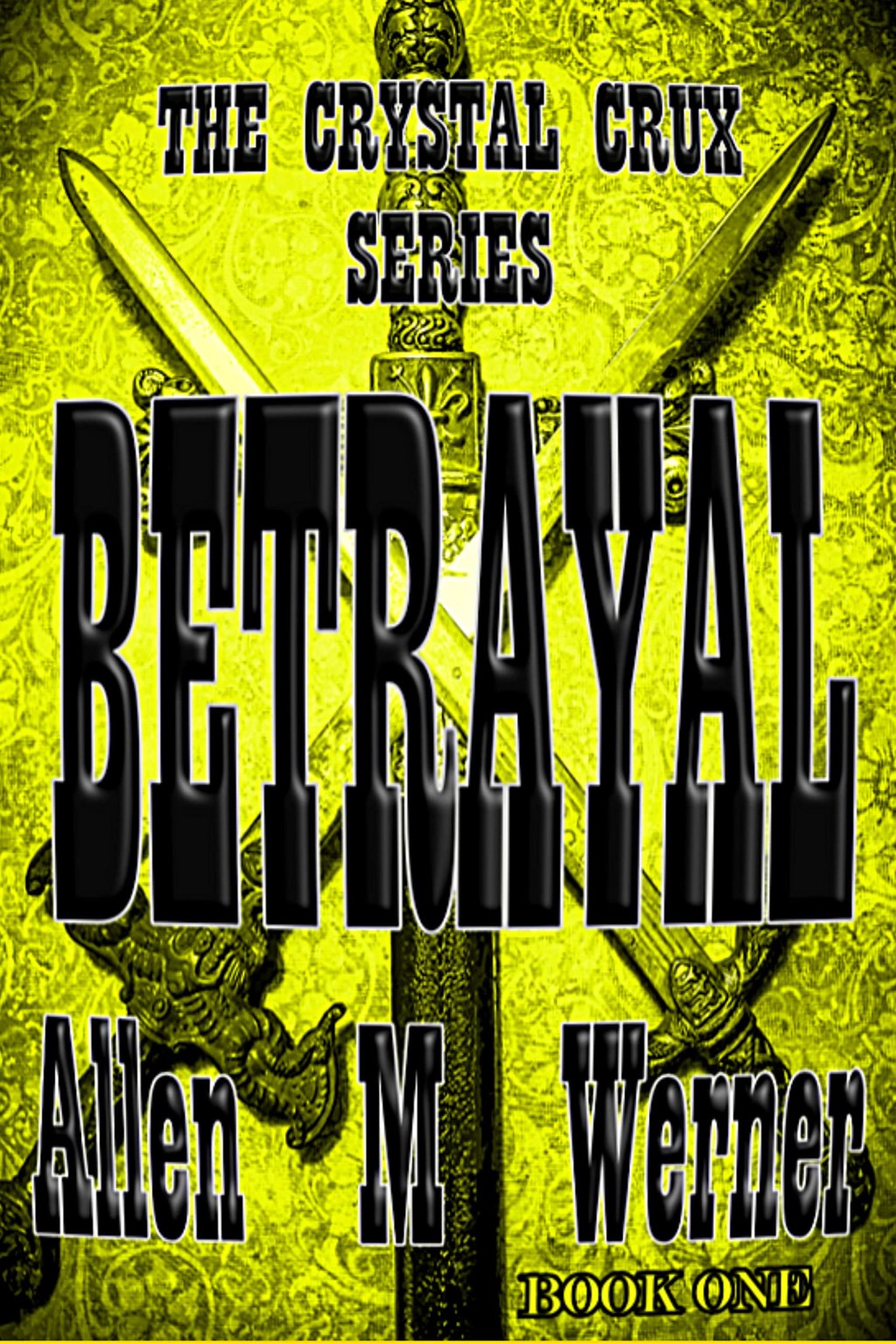
– Excerpt from The Crystal Crux Series: Betrayal by Allen M Werner
Time really flies. 10 years ago today, I began a path of discovery I had not really attempted before. I had written before and submitted things to publishing houses and contests, but I never really embraced being an author, a published author until Betrayal went live on January 10, 2016.
It was exciting and nerve-wracking putting your words, your thoughts, your ideas out into the void of possibilities unsure how it would be received.
I was relieved to receive so much praise for taking the step, and some admiration for what I had written. A lot of time, energy, devotion and love went into it. I think the only negative criticism I received, which wasn’t much, was from people who thought the language was too flowery or descriptive, but that is how epic fantasy is. It’s supposed to be flowery and descriptive and over the top. It’s fantasy on an epic level. It’s more than a simple tale about one person doing something. Many characters are explored, and many paths are taken. Reader of epic fantasy go in expecting to enter another world inhabited by known and unknown entities.
That’s what I tried to do when I wrote Betrayal.
One of the other things I remember being told about Betrayal was, they didn’t like the ending. I had stated at the beginning that The Crystal Crux was a ten-day journey, and Betrayal was Day One of that journey. Some people wanted all ten days in one book.
When I first started learning how to write a novel, I probably could have fit all ten days into one book. But as I was writing Betrayal, the book took on a life of its own and I started questioning what I was writing more deeply than I thought possible. I started wanting to know more about my characters and their backgrounds, their loves and hates.
When I first started writing The Crystal Crux, I had not even formulated how Pero and Francis Whitehall met. They were best of friends but why? When did they meet? I didn’t want it to be a childhood friend which often happens in many tales. And as I began developing Whitsuntide and the melee, Francis Whitehall became more and more real to me. I saw this as an opportunity to fashion a nearly flawless knight to be Pero’s companion, since Pero himself is not a flawless knight.
Pero’s story, which is what The Crystal Crux really is, is a knight going through a crisis, and he needed a foundation to fall back on when he thought he was losing his mind and all hope was fading.
Francis developed into one of those foundations, as did Anthea Manikos, and his parents. As I kept writing, I began to create them and develop them. It took a lot of time and study, and many of the things I wrote about them never even made it into the books. I had to learn how to pick and choose what was necessary, or at least interesting, to continue the plot.
And then came the enemy, Pero’s enemies. I wanted them to be rough, cold and cruel, but also human. And as I worked on them, I became more and more interested in them as well.
When I first started writing The Crystal Crux, I never imagined any of this. But I was learning what made good fantasy fiction.
And even now, I can still read what I wrote and kick myself for not writing certain things differently, but I think all good authors do that. They are always finding their own mistakes, or at least, the things they can improve upon in the future. This is why I wrote a second edition for the first couple books in The Crystal Crux Series. I saw things I wanted to change because I had grown as an author. And honestly, I tweaked a few things because of things I wrote in the later books, to help the tale be better synchronized.
As spontaneous as a bolt of lightning, Pero stretched forth his strong right hand and grabbed the crucifix on Anthea’s red bureau. In an iconoclastic fit, he brandished it high above his head as though it were a sword. With a mighty scream, he smashed it on the floor. A blessed arm broke off as dozens of colored stones were dislodged.
Misfortunately, during his frantic wheeling motion, the prickly spur on the heel of his left boot caught and upended the antique loom. While jewels from the cross scattered and tinkled across the flagging, an unexpected blizzard of splinters and sticks from the fragile wooden device accompanied them. It was an irreparable mess.
– Excerpt from The Crystal Crux Series: Betrayal
Before I end this, I want to touch upon this moment in the story because I think it was vital and crucial to the ending.
When I first started writing The Crystal Crux, this scene didn’t exist. Anthea herself hardly existed. I think, Pero got the orders and simply left.
After I started developing Anthea Manikos more, I knew it was necessary that I bring her into his parting from Capua as a sort of lynchpin.
Pero was making his fight with “God” when he leaves Capua, but I didn’t think it was enough to leave it as a philosophical journey of man vs his creator. Pero had to damage things, people, relationships. He had to sink down to a point where he felt he couldn’t go back. Breaking the cross was symbolic of his break with his creator, but his accidently breaking Anthea’s precious antique loom was symbolic of injuring her. It served to give his abandoning her, purpose and meaning. His only problem was – that as important as the loom and the other things in her life were to her, Pero was more important. And she showed Pero this when she threw everything aside as he was leaving and begged him not to go. She was willing to forgive everything. She just didn’t want to face the world without him. And Pero had to force himself to resist her mercy and kindness.
Oftentimes when people are in crisis, this is what happens. They don’t mean to strike out or damage things, but they hurt the people who care about them the most. The ones who care the most get the brunt of what is happening.
When Pero walks out her door, it is symbolic of death. He is throwing away his old life because he doesn’t have any hope for it anymore.
But the truth for Pero is, as Anthea kept telling him, this wasn’t who he is. He was a better man than this. It was his duty to discover hope again. And that is why, on his journey to Eagles Pass and so on, he constantly finds it impossible to be evil like his enemies. He can’t behave like they do no matter how much he tries. He’s always doing the right thing when the opportunity to do bad is there. And it’s all building up inside of him, piece by piece, the fragments of hope which eventually bring him home and back to his senses.
If you have already read Betrayal and the other books, I’d like to know what you thought. If you haven’t, I hope you give them a chance. Let me know if it is entertaining and touches your heart. I hope it enflames, excites, angers and encourages you. It has for me. I am proud of what I have written. The world of The Crystal Crux lives inside my head, all these characters and places, all these events. Sometimes they feel as real to me as people I know. But that’s one of the first lessons of being an author. You have to immerse yourself into the world you are building. You have to live there as much as the characters do. And that’s why it’s important to get away from everything in order to write. You have to train your mind to leave your family for a while, so you can go on a crusade with these fictional people.
This is difficult for me because I am a family man. I love being around my family, around my wife, kids and grandkids. It brings me the greatest joy.
I like being an author. I like my job where I work with people with mental health issues. But at the end of the day, my family comes first. I’d rather be with them than anywhere else. Nothing else comes first in this life.
My Creator comes before them but that is spiritual and the biggest part of my motivation to write. I interject a lot of my faith and beliefs into my writing. I try not to make it sound preachy. I seed the words my characters say with my own beliefs.
Francis is easy to write because he epitomizes much of what I want to believe about myself.
Pero is easy to write because I have been where he is, struggling with loss, and doubts, and fears, and hopelessness.
Anthea is easy to write because she is in love, and her love for Pero has become the most important part of her life. And when he’s not there, the struggles she faces are real to me.
And on the other side, a character like Rugerius Fabbro is easy for me to write because he’s nearly the opposite of Pero. Whatever Pero wouldn’t do, Rugerius does. He’s ruthless and uncaring, but I still gave him some sense of honor and nobility, so he is not completely unredeemable. In fact, it is his brother, Talento, who is worse because his ruthlessness and cruelty aren’t physically manifested. He works in the shadows and has no honor or nobility. He’s a gutless opportunist who won’t act unless the cards are all in his favor.
But that’s enough for now.
Thanks to all my supporters and readers out there.
The Crystal Crux tale is not over yet. I have two more plans for the tale in the works as well as an anniversary set of the five books combined. Hopefully I will find the time and health to complete all of this in 2026 – as well as adding another addition to the Shades of Myth series. If you haven’t done so already, go pick up a copy of Ares In Chains and let me know what you think. It’s Greek mythology, a short novella, quick and easy to read.
Until next time, stay inspired and keep reading.




 Author Allen M Werner
I’d like your feedback