
Lighting no candles, Meliore Fabbro paced her husband’s dark study awaiting an audience with him. Tacred Fabbro was the Lord of Parthenope, the Grand Duke of Campania, an Italian kingdom situated north of the Bay of Naples on the coast of the Tyrrhenian Sea.
Where to begin?
Authors often begin their stories at a place and time that seems right to them but as the story progresses, and methods and motivations shift, new realities awaken and the entire structure of a book can take on a life of its own. That’s what happened to me.
The original version of the story I started back in the 80s was sort of like The Princess Bride.
A little boy in our time who is an only child living with his mother, is mad at his mother for some reason. He storms out of the house feeling alone and betrayed by his father leaving them. He goes to a nearby quarry and down there where the big machines operate and smoke and ash float around, he finds a crystal that has been unearthed. He grabs it and is immediately filled with a sense of dread and suspicion. He fears someone will want to take it from him. He’s very possessive of it and runs out of the quarry and into the woods where he stops to look into the crystal, into its heart where a faint red glow reaches out to him. Aimless, mesmerized by his find, his feet just start walking. He is startled awake by the screech of a loud bird and night is drawing near. He’s been gone a long time and has no idea where he’s wandered off to. But he still has the crystal. He was staring at it the entire time he walked.
Ahead of him is a cabin, and in front of the cabin sits an old man with a cane. The stranger bids the nameless boy to come closer. The strange power in the crystal gives him a certain courage he never had before to go towards the old man. The old man convinces the boy to reveal what he is hiding. Of course, the old man’s eyes light up when he sees the crystal. He tells the boy that the crystal is a special crystal, and he knows a special story about the crystal and four others just like it.
The old man bids the boy to follow him into the cabin because it is getting dark outside and no one wants to get caught out in the woods alone with the wild animals.
Against his better judgment, the boy goes inside the cabin with the old man.
The old man says his wife will be along shortly but until then, beneath the glow of candlelight, he tells the boy an ancient story about the crystal.
From here, we leave the boy and the old man and go back in time to the end of the Roman Empire when barbarians were running amok and the world was in chaos.
I had a series of short jarring scenes where the reader is pulled back out of the story to remind them of the boy and the old man telling the story.
When I started really working on The Crystal Crux Series for publication, I found no good way to keep all these jarring scenes to the present in the story. I didn’t want the reader to have to keep being reminded that what they were reading was actually a story an old man was telling a boy, so I got rid of it completely.
That was difficult. I spent a lot of time working on it and liked it, but I felt it had no place in the published work, so I had to get rid of it.
This was the time when her sixty-year-old husband customarily retired to his chambers to peruse the documents that had mushroomed across his desk during the day.
In the 80s, because the story I was writing was set just after the fall of the Roman Empire, the main character was going to be a tribune named Alexander – not a Spanish caballero named Pero de Alava.
I don’t think I ever gave Alexander a last name.
Some of that original story was influence by The Robe by Lloyd C Douglass. I was picturing a very Romanesque world falling quickly into disrepair because of barbarism and other unpleasant things.
But as I edited and reshaped the story, I decided against the whole Roman Empire concept and moved it up into the High Middle Ages (1000-1300).
I was still drawn to the idea of keeping it in Italy, in the Campania region where a lot of ancient mythology and lore existed. The land is unstable, volcanic and dangerous in its own right. In the medieval times, there were bogs and marshes and deep uncharted woods. Many superstitions. Lots of religion and cults. The perfect breeding ground for storytelling.
I can’t exactly recall how my characters became foreign to the shores, Pero being Spanish, Anthea being Greek, and Francis being English. It just happened as I expanded the story to include the backgrounds of the characters and the other areas of Europe they might have been before landing in Capua. I also purposefully decided to call Naples, Parthenope, after its old Greek name just for the sake of nuance.
With weathered hands, Meliore brushed dust from her tan riding dress. She was disheveled but dared not risk a moment refreshing in her quarters. Few people had knowledge of her premature return to Parthenope. She meant to keep it so. A fortnight on holiday in Melfi was long enough. Tancred had no reason to expect her this soon. Surprise.
As I began to create Pero de Alava’s character, I also began to craft his friends, allies and enemies. In the original 80s version, I did not go into any such depth. The entire story was less than a hundred pages.
It was a short story by all accounts.
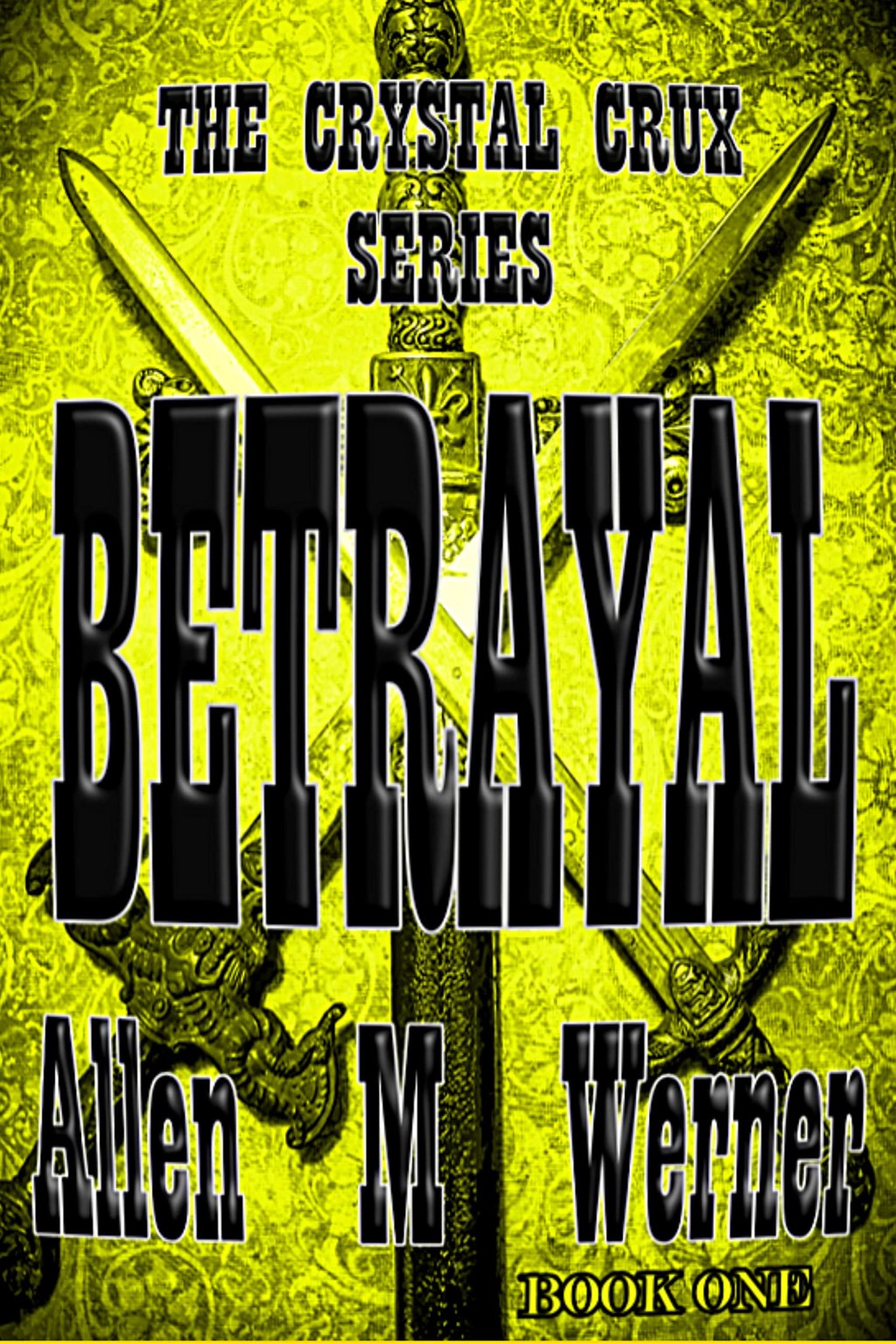
What happened when I started really researching and writing forced the story to grow into a juggernaut. What was supposed to be ten days in less than one hundred pages turned into five full novels.
Book One: Betrayal, is just Day One by itself.
I started enjoying the creation of Pero’s enemies probably a bit too much because I finally decided I was going to set the stage by talking about his enemies.
That is why Betrayal begins with Gherardus Fabbro’s rise to the throne.
Meliore and Tancred were his parents.
Gherardus was not the eldest son. He was the middle child, the second of three. He wasn’t supposed to inherit the throne. But after the deaths of their parents, the eldest son, Avenel, consumed by guilt, leaves Parthenope of his own accord.
Gherardus assumes the throne by default.
The first two chapters of Betrayal are devoted to the events that placed Gherardus Fabbro on the throne.
Day One, where the tale actually starts, is Chapter 3 – which is titled, Betrayal, and it is Friday the 13th, 1198, because, why not?
An hour before lauds, sixty-eight-year-old Gherardus Fabbro, the Grand Duke of Campania, slid through a maze of corridors in the depths of the Castel dell Ovo in the capital city of Parthenope. His anxious fingers spun a band of gold on the index finger of his right hand.
And here we have Gherardus Fabbro in charge and he’s older than his father was when his father died and left him the throne.
This is the world Pero de Alava is up against. A world where assassination and betrayal got Gherardus his throne.
In my next installment, I’ll dive deeper into Betrayal, and the plans Gherardus and his court devised for Pero de Alava.
Until next time, stay inspired and keep reading.
Allen M Werner is the author of the epic dark fantasy books The Crystal Crux Series.

Be sure to also check out a novella titled
Ares In Chains.



 Author Allen M Werner
I’d like your feedback